
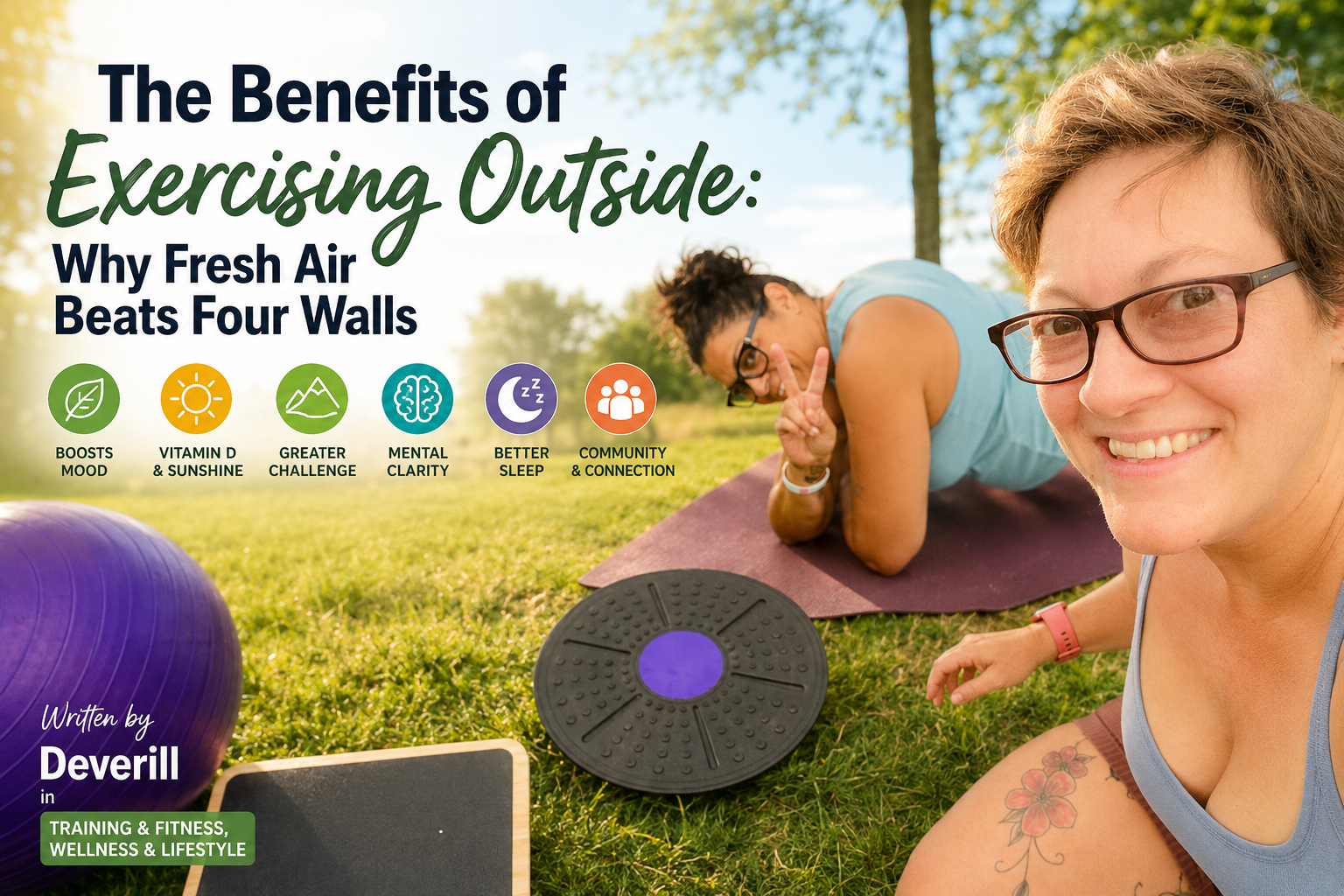
When we think of fitness, we often imagine treadmills, weights, or studio classes. But moving your body outdoors—whether that’s a run in the park, a walk at lunchtime, or yoga on the grass—offers benefits that extend beyond the gym walls. Research shows that exercising outside boosts not only your physical health but also your mood, mental clarity, and overall wellbeing.
1. A Natural Mood Booster
Spending time in nature has been shown to reduce stress and improve mood. A review of 33 studies found that even short-term exposure to natural environments significantly reduces feelings of depression and negative mood Bratman et al., 2019. Another study on “green exercise” (physical activity in outdoor environments) found consistent improvements in self-esteem and reductions in tension, anger, and depression (Gladwell et al., 2013).
Even just 15–20 minutes outdoors can lower cortisol levels (the stress hormone) and increase feel-good brain chemicals like serotonin and dopamine (Cleveland Clinic, 2024).
2. Sunshine and Vitamin D
Sunlight helps the body produce vitamin D, which supports bone health, immune function, and mood regulation. Low levels of vitamin D are linked to fatigue, low mood, and weakened immunity. A 2023 study found that higher vitamin D intake and sunlight exposure were associated with lower perceived stress (Dutta et al., 2023).
3. Greater Variety and Challenge
Unlike the predictable surface of a treadmill, outdoor terrain varies—think grass, trails, slopes, and steps. These natural changes challenge balance, coordination, and strength in different ways, leading to more well-rounded fitness. Research also suggests that outdoor exercise may provide greater psychological benefits than the same workout performed indoors (Gladwell et al., 2013).
💡 Want to experience this first-hand? My Power Circuits sessions are designed to make the most of outdoor movement. Using functional exercises, varied terrain, and bodyweight circuits, these sessions build strength, stamina, and resilience—while reaping all the benefits of training in the fresh air.
4. Mental Clarity and Focus
Time outdoors has been linked to sharper focus and reduced mental fatigue. UC Davis Health notes that being in nature helps restore attention, boosts creativity, and improves overall concentration (UC Davis Health, 2023).
5. Better Sleep Patterns
Exposure to natural daylight supports healthy circadian rhythms—your body’s internal clock—which directly impacts sleep quality. A study published in Sleep Health linked daylight exposure and vitamin D with better sleep and improved mood (Muscogiuri et al., 2020).
6. Community and Connection
Exercising outdoors can also strengthen social ties. Park runs, outdoor bootcamps, and even a neighbourly walk provide opportunities to connect with others—a factor that plays a big role in long-term wellbeing and motivation.
Final Thought
Exercising outdoors doesn’t have to be extreme. It could be as simple as stretching in the garden, walking the dog, or cycling around your neighbourhood. The evidence is clear: time spent moving outside can lift your mood, sharpen your mind, improve your health, and even help you sleep better.
If you’d like to bring these benefits into your own routine, come and join us for a Power Circuits session—a fun, energising way to build fitness while enjoying all the rewards of training outdoors.
References
Bratman, G.N., Hamilton, J.P., Hahn, K.S., Daily, G.C. and Gross, J.J. (2019) A systematic review and meta-analysis of nature exposure and depressive mood. arXiv preprint arXiv:1907.10013. Available at: https://arxiv.org/abs/1907.10013 [Accessed 17 September 2025].
Cleveland Clinic (2024) How the outdoors can improve your mood. Cleveland Clinic Health Essentials. Available at: https://newsroom.clevelandclinic.org/2024/04/09/how-the-outdoors-can-improve-your-mood [Accessed 17 September 2025].
Dutta, S., Kumar, A., Kar, S., Samanta, P., Saha, S., and Kundu, S. (2023) ‘The association between vitamin D, sunlight exposure and perceived stress: A cross-sectional study’, Frontiers in Nutrition, 10: 10223728. doi:10.3389/fnut.2023.10223728. Available at: https://pmc.ncbi.nlm.nih.gov/articles/PMC10223728/ [Accessed 17 September 2025].
Gladwell, V.F., Brown, D.K., Wood, C., Sandercock, G.R.H. and Barton, J.L. (2013) ‘The great outdoors: how a green exercise environment can benefit all’, Extreme Physiology & Medicine, 2(1), p.3. doi:10.1186/2046-7648-2-3. Available at: https://pmc.ncbi.nlm.nih.gov/articles/PMC3710158/ [Accessed 17 September 2025].
Muscogiuri, G., Barrea, L., Scannapieco, M., Di Somma, C., Scacchi, M., Aimaretti, G., Savastano, S. and Colao, A. (2020) ‘The lullaby of the sun: The role of vitamin D in sleep disturbance’, Sleep Health, 6(5), pp. 511–518. doi:10.1016/j.jand.2020.01.001. Available at: https://www.sciencedirect.com/science/article/pii/S1087079220301222 [Accessed 17 September 2025].
UC Davis Health (2023) 3 ways getting outside into nature helps improve your health. UC Davis Health Blog, May 2023. Available at: https://health.ucdavis.edu/blog/cultivating-health/3-ways-getting-outside-into-nature-helps-improve-your-health/2023/05 [Accessed 17 September 2025].

About the Author
Jade Deverill is the founder of MoveHer Co and a passionate advocate for helping women build strength, confidence, and sustainable fitness habits. With a focus on functional movement, outdoor training, and community connection, Jade creates welcoming spaces where women can improve their health while enjoying movement they genuinely love. Through classes, workshops, and educational content, she aims to make fitness accessible, empowering, and enjoyable for every stage of life.