Category: Training & Fitness

  • Use It or Lose It: Why Movement Matters More Than You Think

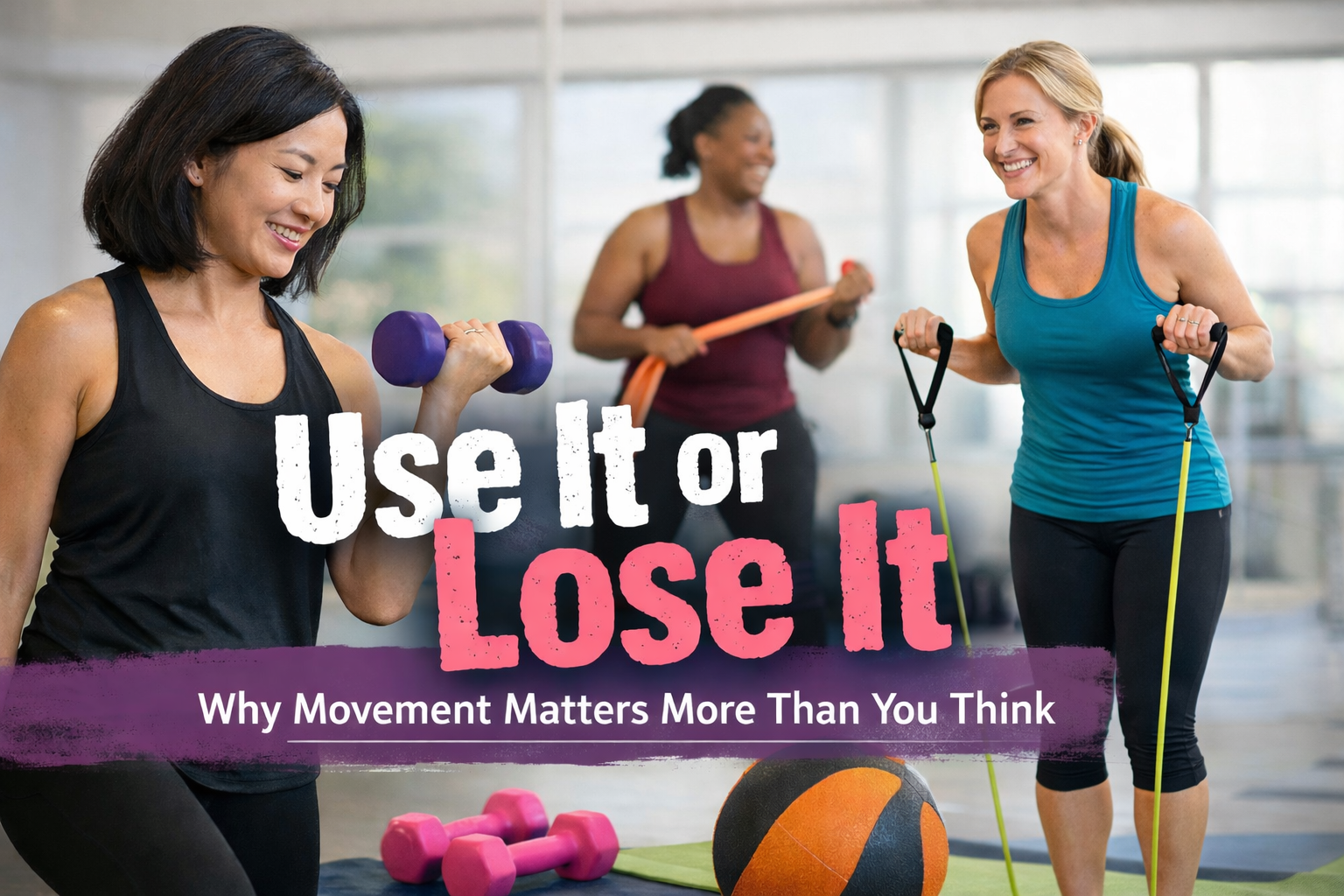
    Use It or Lose It: Why Movement Matters More Than You Think

    “Use it or lose it” is one of those phrases that gets thrown around a lot — often as a warning, sometimes as a joke — but behind it sits a very real (and very changeable) truth about how our bodies work.

    In exercise science, this idea is called reversibility. And while the word itself sounds technical, the concept is surprisingly simple and very relevant to everyday life.

    Reversibility means that when we stop using certain physical abilities, our bodies gradually adapt downwards. Strength fades, movement feels stiffer, balance feels less secure, and everyday tasks can start to feel heavier than they used to. Not because we’re “getting old” or doing something wrong — but because the body is incredibly efficient and only keeps what it needs.

    The important part?
    That same system works in your favour when you start moving again.

    The quiet changes we don’t always notice

    Loss of fitness rarely happens dramatically. It’s subtle.
    It shows up as avoiding the floor because getting back up feels awkward.
    Holding the banister on the stairs “just in case”.
    Feeling stiff after sitting for too long.
    Needing a moment to steady yourself when you stand.

    Many women assume these changes are inevitable. They aren’t.

    They’re simply signs that certain systems — muscles, joints, balance, cardiovascular fitness — haven’t been asked to work consistently for a while. When they’re reintroduced gradually, the body responds far more positively than most people expect.

    Why this matters so much for women

    Women often experience longer periods of disrupted movement — pregnancies, injuries, caring responsibilities, confidence dips, hormonal changes. Life gets busy, and structured exercise is usually the first thing to go.

    What we see time and time again is not a lack of ability, but a lack of confidence after time away. Women worry they’re “too unfit”, “too stiff”, or “too far gone” to start again.

    In reality, starting again is exactly what reversibility responds to.

    Not with extreme workouts.
    Not with punishment.
    But with regular, functional movement done in a supportive environment.

    Progress doesn’t come from pushing harder — it comes from showing up

    One of the biggest misconceptions in fitness is that improvement requires constant intensity. In reality, consistency matters far more — especially in the early stages.

    When you move your body regularly, muscles begin to remember how to produce force again. Joints regain confidence as they’re taken through safe, controlled ranges. Balance improves simply because it’s being practised. Everyday movements — standing up, lifting, walking, reaching — start to feel easier and less effortful.

    Even short sessions, repeated week after week, send a powerful message to the body: this is important — keep it. That’s how foundations are rebuilt.

    And once that consistency is in place, something important happens.

    This is where progressive overload can be introduced — gradually and intentionally. That might look like a little more resistance, an extra repetition, a slightly longer hold, or a movement performed with greater control or range. Not all at once, and never rushed.

    Progressive overload only works because consistency already exists. Without regular movement, there’s nothing to build on. With it, the body is ready to adapt upwards — safely, confidently, and sustainably.

    That’s how real change happens. Not by doing everything at full intensity from day one, but by showing up, building trust with your body, and then gently asking for more when the time is right.

    How MoveHer Co fits into this picture

    Our classes are built around the idea that movement should support life, not dominate it.

    That’s why we prioritise:

    • Full-body, functional movements
    • Options for different abilities in the same space
    • Standing alternatives and floor adaptations
    • Progression without pressure

    We’re not training for perfection. We’re training for confidence, independence, and long-term strength.

    Because the goal isn’t to be the fittest person in the room — it’s to keep doing the things that matter to you, comfortably and confidently.

    What does “reversibility” actually mean?

    Reversibility is the body’s way of adapting to what you do — or don’t do.

    • When you stop training strength, muscles get weaker
    • When you stop challenging balance, balance reduces
    • When you stop moving joints through range, stiffness increases

    But here’s the key part:
    👉 When you start using those systems again, they improve.

    The body doesn’t remember how long you’ve been inactive — it only responds to what you’re doing now.

    That’s why it’s never “too late” to start.
    And why doing something is always better than doing nothing.

    A final thought

    “Use it or lose it” isn’t meant to scare you.
    It’s meant to empower you.

    Every session you attend, every movement you practise, every time you choose to show up — you’re choosing strength over stiffness, confidence over hesitation, and independence over limitation.

    And that’s exactly what MoveHer Co is here to support.

  • The Benefits of Exercising Outside: Why Fresh Air Beats Four Walls

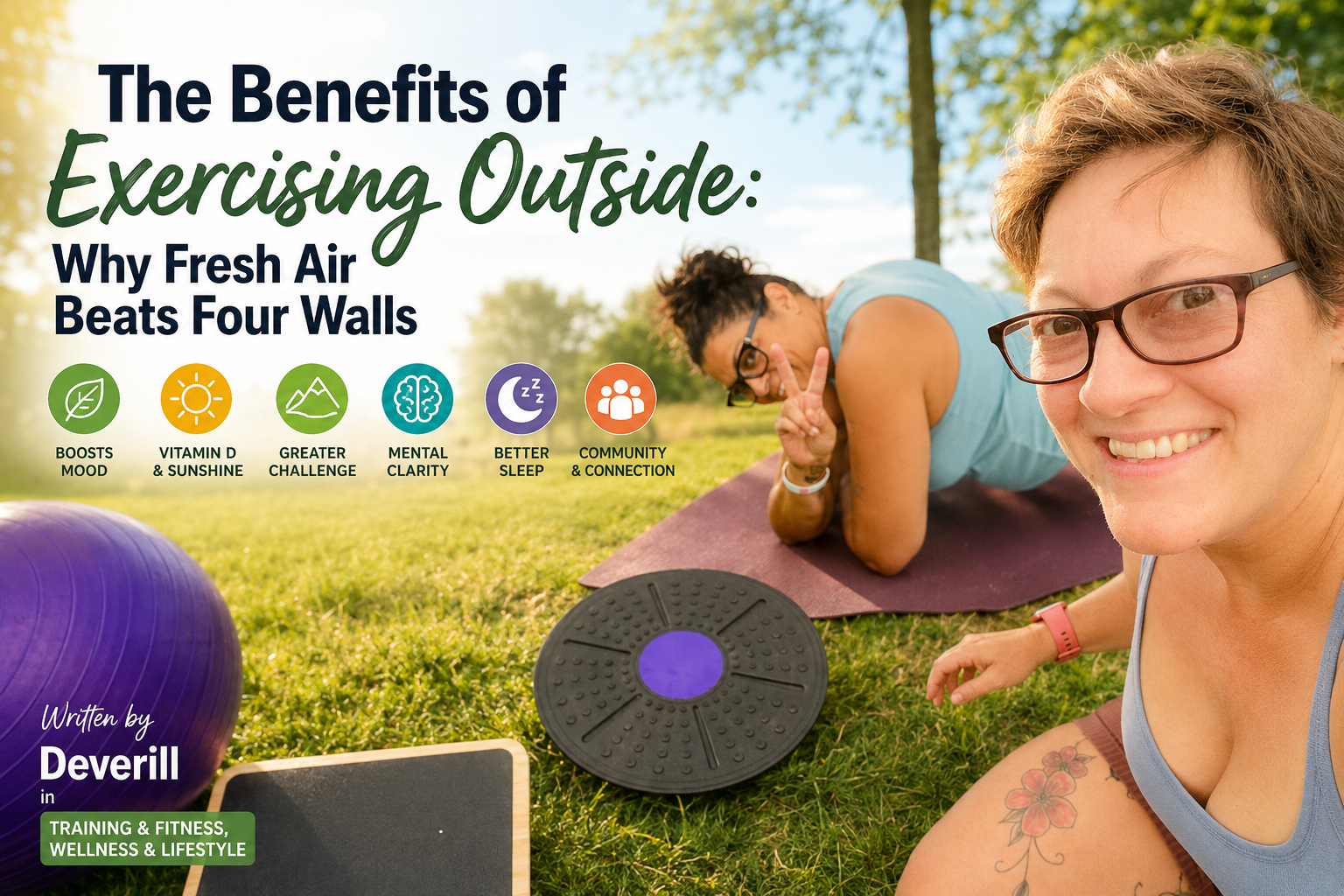
    The Benefits of Exercising Outside: Why Fresh Air Beats Four Walls

    When we think of fitness, we often imagine treadmills, weights, or studio classes. But moving your body outdoors—whether that’s a run in the park, a walk at lunchtime, or yoga on the grass—offers benefits that extend beyond the gym walls. Research shows that exercising outside boosts not only your physical health but also your mood, mental clarity, and overall wellbeing.

    1. A Natural Mood Booster

    Spending time in nature has been shown to reduce stress and improve mood. A review of 33 studies found that even short-term exposure to natural environments significantly reduces feelings of depression and negative mood Bratman et al., 2019. Another study on “green exercise” (physical activity in outdoor environments) found consistent improvements in self-esteem and reductions in tension, anger, and depression (Gladwell et al., 2013).

    Even just 15–20 minutes outdoors can lower cortisol levels (the stress hormone) and increase feel-good brain chemicals like serotonin and dopamine (Cleveland Clinic, 2024).

    2. Sunshine and Vitamin D

    Sunlight helps the body produce vitamin D, which supports bone health, immune function, and mood regulation. Low levels of vitamin D are linked to fatigue, low mood, and weakened immunity. A 2023 study found that higher vitamin D intake and sunlight exposure were associated with lower perceived stress (Dutta et al., 2023).

    3. Greater Variety and Challenge

    Unlike the predictable surface of a treadmill, outdoor terrain varies—think grass, trails, slopes, and steps. These natural changes challenge balance, coordination, and strength in different ways, leading to more well-rounded fitness. Research also suggests that outdoor exercise may provide greater psychological benefits than the same workout performed indoors (Gladwell et al., 2013).

    💡 Want to experience this first-hand? My Power Circuits sessions are designed to make the most of outdoor movement. Using functional exercises, varied terrain, and bodyweight circuits, these sessions build strength, stamina, and resilience—while reaping all the benefits of training in the fresh air.

    4. Mental Clarity and Focus

    Time outdoors has been linked to sharper focus and reduced mental fatigue. UC Davis Health notes that being in nature helps restore attention, boosts creativity, and improves overall concentration (UC Davis Health, 2023).

    5. Better Sleep Patterns

    Exposure to natural daylight supports healthy circadian rhythms—your body’s internal clock—which directly impacts sleep quality. A study published in Sleep Health linked daylight exposure and vitamin D with better sleep and improved mood (Muscogiuri et al., 2020).

    6. Community and Connection

    Exercising outdoors can also strengthen social ties. Park runs, outdoor bootcamps, and even a neighbourly walk provide opportunities to connect with others—a factor that plays a big role in long-term wellbeing and motivation.

    Final Thought

    Exercising outdoors doesn’t have to be extreme. It could be as simple as stretching in the garden, walking the dog, or cycling around your neighbourhood. The evidence is clear: time spent moving outside can lift your mood, sharpen your mind, improve your health, and even help you sleep better.

    If you’d like to bring these benefits into your own routine, come and join us for a Power Circuits session—a fun, energising way to build fitness while enjoying all the rewards of training outdoors.

    References

    Bratman, G.N., Hamilton, J.P., Hahn, K.S., Daily, G.C. and Gross, J.J. (2019) A systematic review and meta-analysis of nature exposure and depressive mood. arXiv preprint arXiv:1907.10013. Available at: https://arxiv.org/abs/1907.10013 [Accessed 17 September 2025].

    Cleveland Clinic (2024) How the outdoors can improve your mood. Cleveland Clinic Health Essentials. Available at: https://newsroom.clevelandclinic.org/2024/04/09/how-the-outdoors-can-improve-your-mood [Accessed 17 September 2025].

    Dutta, S., Kumar, A., Kar, S., Samanta, P., Saha, S., and Kundu, S. (2023) ‘The association between vitamin D, sunlight exposure and perceived stress: A cross-sectional study’, Frontiers in Nutrition, 10: 10223728. doi:10.3389/fnut.2023.10223728. Available at: https://pmc.ncbi.nlm.nih.gov/articles/PMC10223728/ [Accessed 17 September 2025].

    Gladwell, V.F., Brown, D.K., Wood, C., Sandercock, G.R.H. and Barton, J.L. (2013) ‘The great outdoors: how a green exercise environment can benefit all’, Extreme Physiology & Medicine, 2(1), p.3. doi:10.1186/2046-7648-2-3. Available at: https://pmc.ncbi.nlm.nih.gov/articles/PMC3710158/ [Accessed 17 September 2025].

    Muscogiuri, G., Barrea, L., Scannapieco, M., Di Somma, C., Scacchi, M., Aimaretti, G., Savastano, S. and Colao, A. (2020) ‘The lullaby of the sun: The role of vitamin D in sleep disturbance’, Sleep Health, 6(5), pp. 511–518. doi:10.1016/j.jand.2020.01.001. Available at: https://www.sciencedirect.com/science/article/pii/S1087079220301222 [Accessed 17 September 2025].

    UC Davis Health (2023) 3 ways getting outside into nature helps improve your health. UC Davis Health Blog, May 2023. Available at: https://health.ucdavis.edu/blog/cultivating-health/3-ways-getting-outside-into-nature-helps-improve-your-health/2023/05 [Accessed 17 September 2025].

  • Women’s Small Group Fitness: The Secret to Building Confidence and Strength in Mere

    Women’s Small Group Fitness: The Secret to Building Confidence and Strength in Mere

    If the thought of walking into a big, noisy gym makes your stomach turn, you’re not alone. Research shows more than 65% of women avoid the gym due to fear of being judged (Arena Athletic, n.d.), and nearly nine in ten say they feel judged on their appearance while exercising (Balance, n.d.).

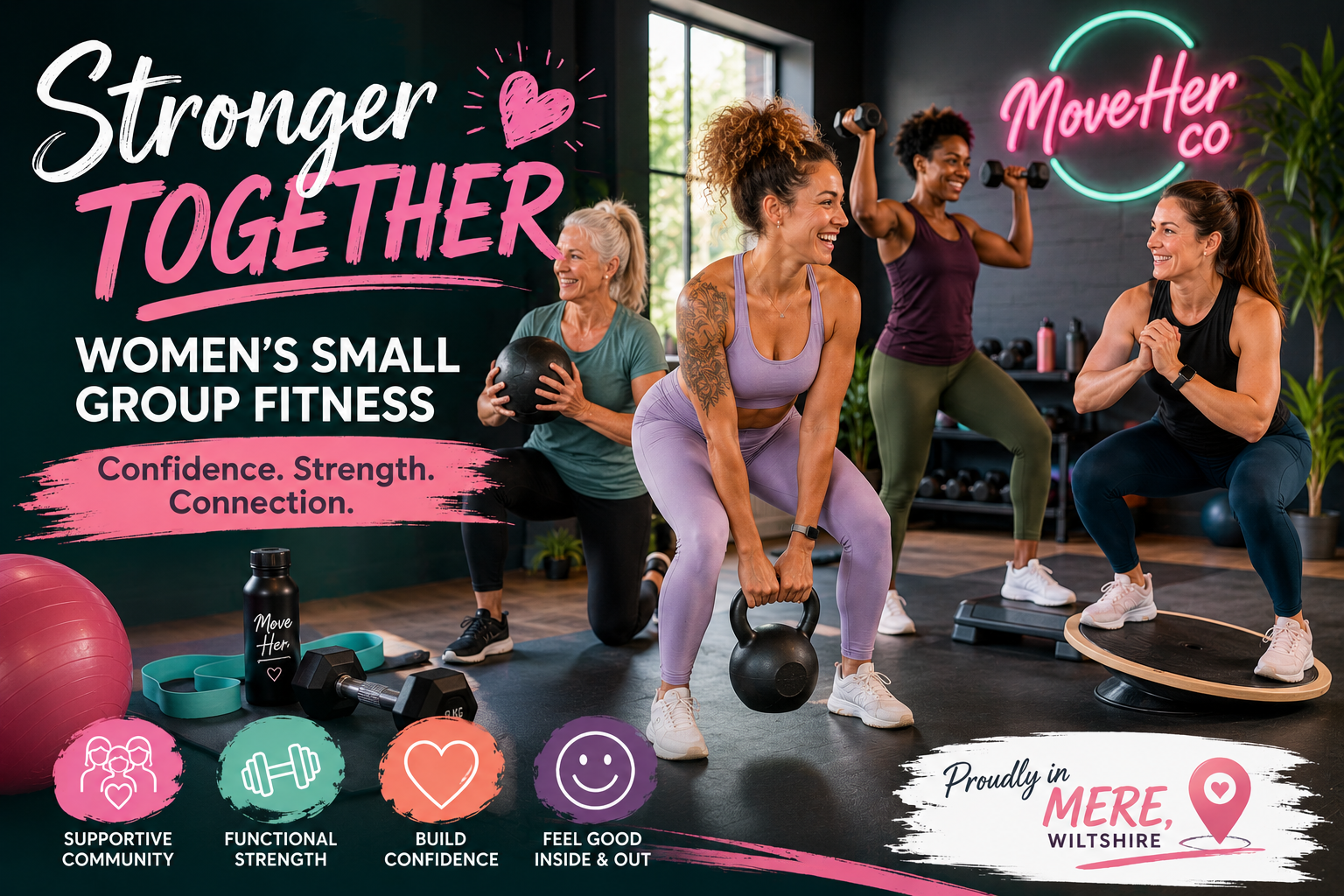
    But there’s a better way to get fit—one that’s supportive, social, and far less overwhelming. At MoveHer Co in Mere, Wiltshire, we believe small group training for women is the sweet spot for building strength, confidence, and connection.


    1. Personal Attention Without the Price Tag

    In our women’s small group fitness classes, you get personalised coaching in a friendly, supportive setting. This means your trainer can correct your form, adapt exercises to your needs, and celebrate your wins—without the high cost of one-to-one sessions.


    2. A Judgement-Free Environment

    Fear of judgement stops 1 in 2 women from being active (Balance, n.d.). That’s why our women-only fitness classes in Mere are designed to be inclusive, supportive, and pressure-free. Everyone works at their own pace—no competition, just encouragement.


    3. Motivation Through Community

    It’s not just about the workout—it’s about the people beside you. Research shows that group exercise boosts motivation, creates lasting friendships, and helps women stay active longer (Yorks, Frothingham and Schuenke, 2022).


    4. Functional Fitness for Real Life

    Our Full-Body Function: Bands, Balls & Boards class uses a circuit format with each exercise as a station, combining resistance bands, stability balls, and balance boards. It’s designed to improve strength, stability, and mobility—skills you’ll use every day. Group programmes like this have a 70% long-term adherence rate (Hawley-Hague et al., 2016), making them sustainable and effective.


    💬 Ready to experience supportive, women’s fitness in Mere?
    Join our next small group session—spaces are limited, but the confidence, strength, and friendships you’ll gain are limitless.

    👉 Book your spot today


    References

    Arena Athletic. (n.d.) A shocking number of women avoid the gym for fear of being judged. Available at: https://www.arenaathletic.com/Blog/a-shocking-number-of-women-avoid-the-gym-for-fear-of-being-judged/ (Accessed: 11 August 2025).

    Balance. (n.d.) Nine in 10 women feel judged at the gym – the knock-on effect is alarming. Available at: https://balance.media/nine-10-women-feel-judged-gym-knock-effect-alarming/ (Accessed: 11 August 2025).

    Yorks, D.M., Frothingham, C.A. and Schuenke, M.D. (2022) ‘Social support from group exercise is linked to greater physical activity, exercise identity, and quality of life in college students’, Journal of American College Health, 70(8), pp. 2460–2467. Available at: https://pmc.ncbi.nlm.nih.gov/articles/PMC9053316/ (Accessed: 11 August 2025).

    Hawley-Hague, H., Horne, M., Campbell, M., Demack, S., Skelton, D.A. and Todd, C. (2016) ‘Multiple levels of influence on older adults’ attendance and adherence to community exercise classes’, Preventive Medicine, 87, pp. 149–159. Available at: https://www.sciencedirect.com/science/article/pii/S0091743516300147 (Accessed: 11 August 2025).