
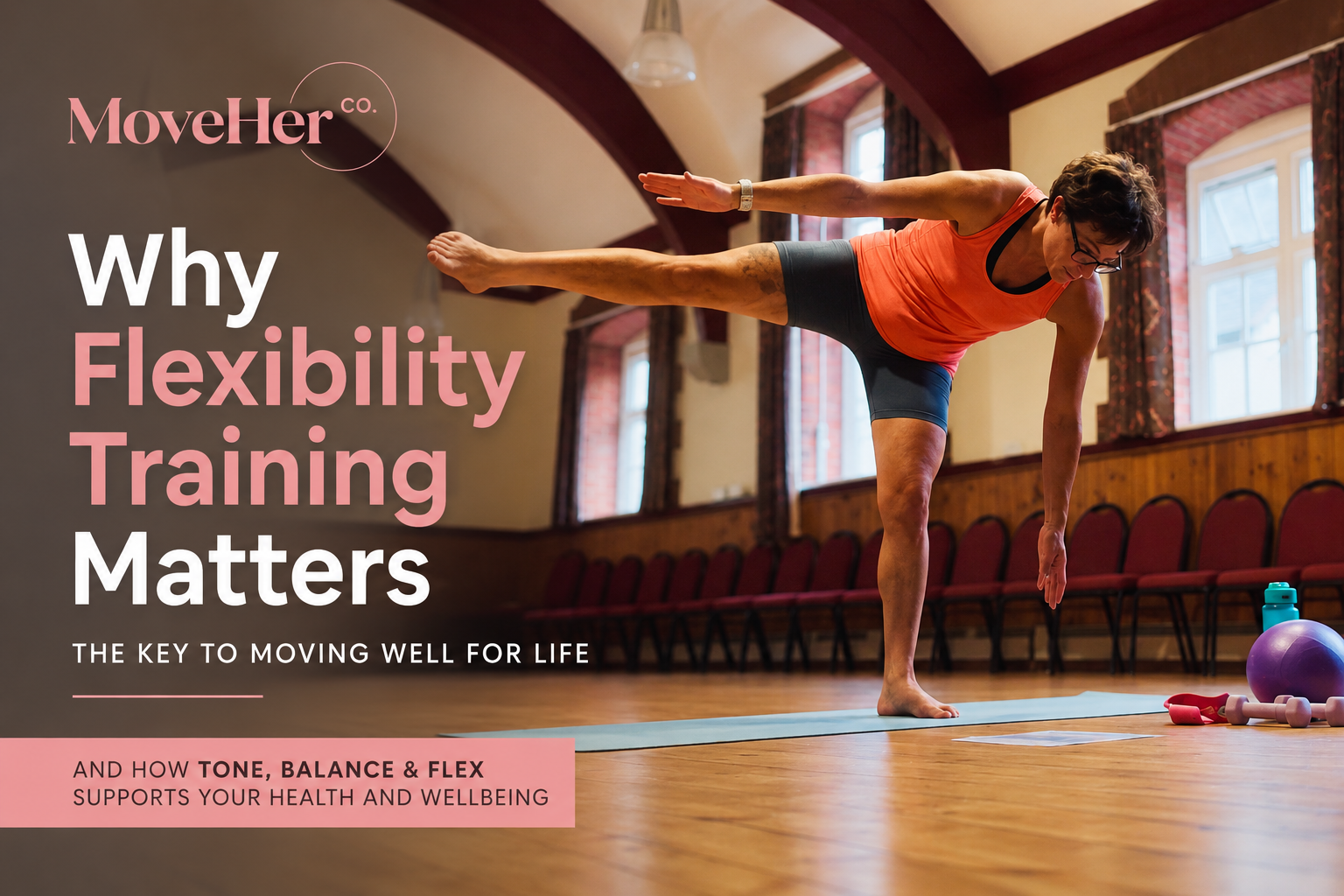
When people think about fitness, strength training and cardiovascular exercise often take centre stage. While both are essential for overall health, flexibility is frequently overlooked. Yet flexibility training plays a crucial role in how we move, feel and function in everyday life.
At MoveHer Co, we believe fitness should support your body for the long term. That’s why flexibility, mobility and balance form an important part of our approach to movement, particularly through our Tone, Balance & Flex classes.
What is Flexibility?
Flexibility refers to the ability of a joint to move through its full range of motion (ROM). Good flexibility allows you to perform daily activities more easily, move efficiently during exercise and reduce unnecessary strain on muscles and joints.
Regular flexibility training creates positive adaptations within the body. Muscles become more elastic and connective tissues, such as tendons and ligaments, become more pliable. These changes can improve movement quality and make everyday tasks feel easier and more comfortable.
According to the American College of Sports Medicine (ACSM, 2021), flexibility training can improve range of motion immediately following a stretching session. However, long-term improvements require consistency, with three to four weeks of regular flexibility training needed before more lasting changes are observed.
The Benefits of Regular Flexibility Training
Improved Movement Efficiency
Whether you’re walking, exercising, lifting shopping bags or playing with your children or grandchildren, your body relies on efficient movement patterns. Research by Rahman and Islam (2020) found that flexibility training can improve the efficiency of skilled movements, allowing the body to move more freely and effectively.
When muscles and joints can move through their intended range, less energy is wasted compensating for restrictions elsewhere in the body. This can improve performance in both sporting activities and everyday life.
Reduced Stiffness and Better Mobility
Modern lifestyles often involve prolonged periods of sitting, driving or working at a desk. These habits can contribute to muscle tightness and reduced joint mobility over time.
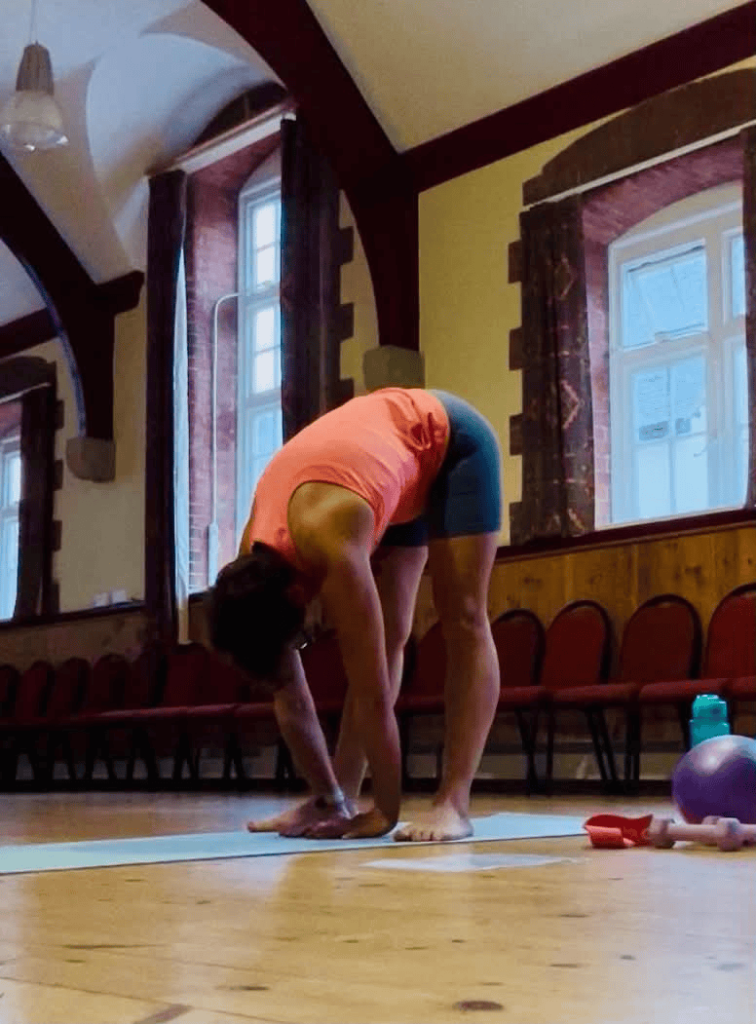
Regular stretching and mobility exercises help combat these effects by encouraging movement through a wider range of motion. Many people notice immediate improvements in how they feel after a flexibility session, often experiencing less stiffness and greater ease of movement.
Support for Recovery
Flexibility training is commonly included as part of a recovery routine. Stretching can help reduce feelings of tightness following exercise and may assist in managing delayed onset muscle soreness (DOMS), the muscle discomfort that often develops after unfamiliar or challenging activity (ACSM, 2011).
While stretching alone won’t eliminate soreness, it can help maintain mobility and support recovery between exercise sessions.
Physical and Mental Relaxation
The benefits of flexibility training extend beyond the physical. Stretching encourages participants to slow down, focus on breathing and become more aware of how their body feels.
Rahman and Islam (2020) concluded that flexibility training can contribute to both physical and mental relaxation. In today’s busy world, taking time to move mindfully can be just as important as the physiological benefits gained from exercise.
Reduced Risk of Injury
Restricted movement at a joint can place additional stress on surrounding muscles and tissues. Improving flexibility and mobility may help the body move more efficiently, reducing unnecessary strain and supporting injury prevention.
While no form of exercise can completely eliminate injury risk, maintaining adequate flexibility is an important component of a well-rounded fitness programme.
How Tone, Balance & Flex Supports Healthy Movement
At MoveHer Co, our Tone, Balance & Flex class has been designed to help women develop strength, stability, mobility and confidence in movement.
The class combines low-impact strengthening exercises with flexibility and balance training, creating a well-rounded session that supports overall physical function. Participants work on improving joint mobility, enhancing muscle flexibility and developing better body awareness, all within a welcoming and supportive environment.
The flexibility component helps improve range of motion and reduce feelings of stiffness, while balance exercises challenge coordination and stability. These elements become increasingly important as we age, helping us maintain confidence in movement and supporting everyday functional activities.
Strength exercises are also incorporated throughout the class, providing the muscular support needed to move safely and effectively through greater ranges of motion. Together, these components create a balanced approach to fitness that promotes long-term health and wellbeing.
Many participants leave feeling taller, looser and more energised after class, while regular attendance can contribute to the longer-term improvements in flexibility and mobility highlighted by current research.
Moving Well for Life
Flexibility training isn’t about touching your toes or achieving extreme ranges of motion. It’s about creating a body that moves comfortably, efficiently and confidently through everyday life.
Whether your goal is to improve mobility, support recovery, reduce stiffness or simply feel better in your body, regular flexibility training offers benefits that extend far beyond the exercise session itself.
At MoveHer Co, we believe movement should help you feel stronger, more capable and more connected to your body. Our Tone, Balance & Flex class provides the perfect opportunity to build flexibility, improve balance and develop functional strength—all while enjoying movement in a supportive community.
Because fitness isn’t just about adding years to your life; it’s about adding life to your years.
References
American College of Sports Medicine (2011) ACSM information on delayed onset muscle soreness (DOMS). Available from: https://content.sph.harvard.edu/wwwhsph/sites/143/2016/10/9_2015Delayed-Onset-Muscle-Soreness-doms.pdf (Accessed: 25 July 2025).
American College of Sports Medicine (2021) ACSM’s Guidelines for Exercise Testing and Prescription.
Rahman, M.H. and Islam, M.S. (2020) ‘Stretching and flexibility: a range of motion for games and sports’, European Journal of Education and Sport, 6(8), pp. 22–36.
About the Author
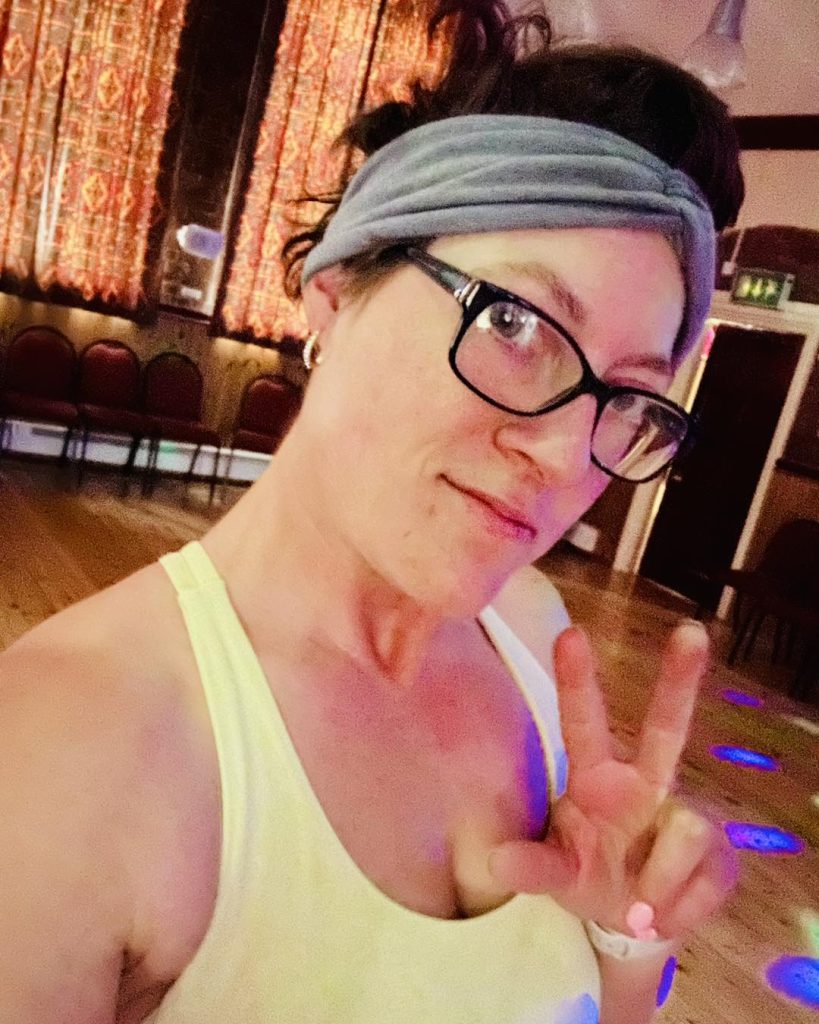
Jade Deverill is the founder of MoveHer Co, a community dedicated to helping women move, feel and live better. With a passion for fitness, wellbeing and empowering women through movement, Jade delivers classes that focus on building strength, improving mobility and boosting confidence at every stage of life.
She created Tone, Balance & Flex to help women develop greater flexibility, stability and functional strength while enjoying movement in a supportive and welcoming environment. Jade is passionate about helping women recognise that fitness isn’t about perfection—it’s about feeling strong, capable and confident in your own body.
When she’s not teaching classes, Jade is committed to promoting the message that movement is one of the most powerful tools we have for improving both physical and mental wellbeing.